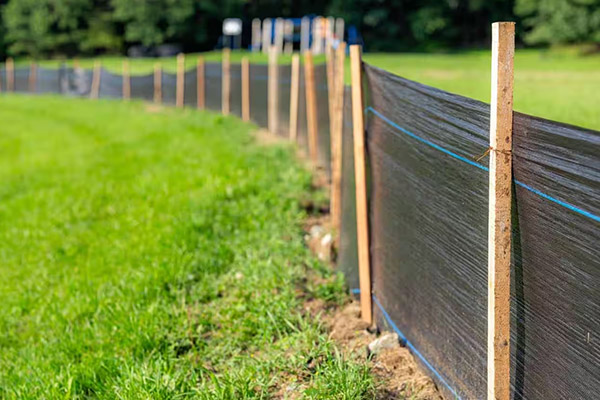


A wire backed silt fence with stakes works as an effective erosion control measure by preventing sediment from leaving construction or disturbed sites. Here’s how it functions:
Geotextile Fabric: The permeable fabric allows water to pass through while capturing sediment.
Wood Stakes: These support the fabric and keep the fence upright.
Sediment Filtration: The wire backed silt fence installation is around the perimeter of a site to catch sediment-laden runoff. As water flows through the fabric, sediment is trapped, preventing it from entering waterways.
Water Flow Control: By slowing down the flow of water, the fence reduces erosion and allows sediment to settle.
Site Protection: The fence helps maintain site stability and prevent sediment pollution, protecting nearby ecosystems.
Proper Placement: Ensure the wire reinforced silt fence is installed on the contour of the land to maximize effectiveness.
Depth and Tension: Stakes should be driven deep enough to withstand water flow and fabric should be taut to prevent sagging.
Regular Maintenance: Inspect for tears or breaches and remove accumulated sediment to maintain functionality.
Cost-Effective: Simple materials and installation.
Regulatory Compliance: Helps meet environmental regulations by controlling sediment runoff.
Environmental Protection: Minimizes the impact on surrounding areas and waterways. Learn about how to install wire backed silt fence.